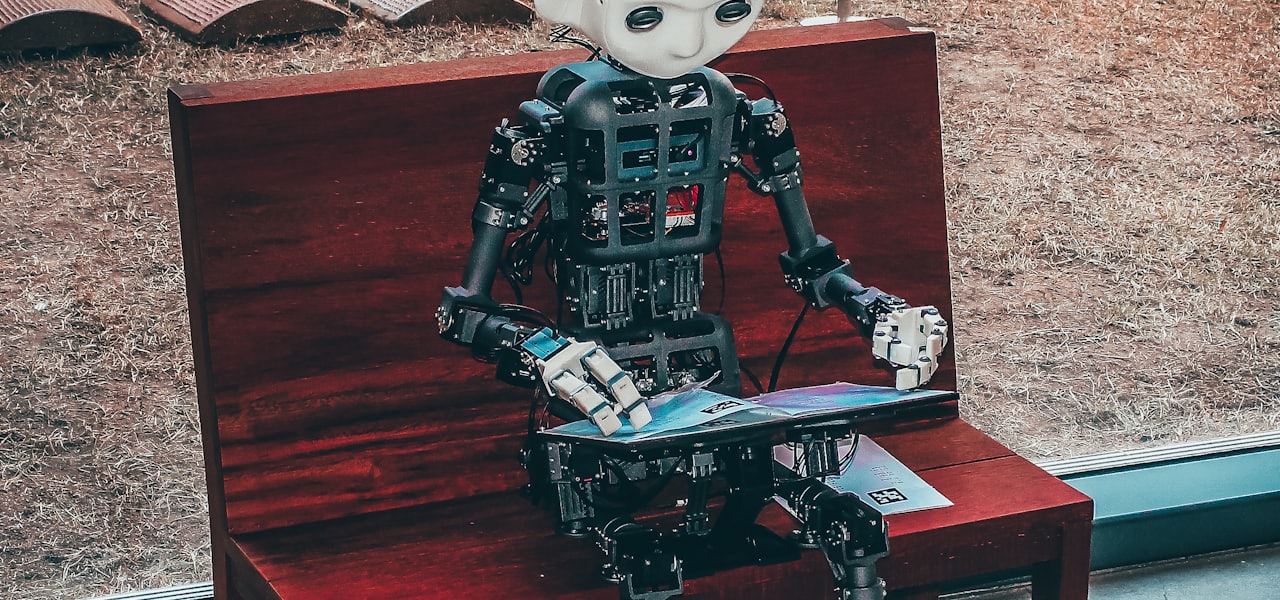
In medical research, an umbrella review is a review of systematic reviews or meta-analyses. They may also be called overviews of reviews, reviews of reviews, summaries of systematic reviews, or syntheses of reviews. Umbrella reviews are among the highest levels of evidence currently available in medicine. By summarizing information from multiple overview articles, umbrella reviews make it easier to review the evidence and allow for comparison of results between each of the individual reviews. Umbrella reviews may address a broader question than a typical review, such as discussing multiple different treatment comparisons instead of only one. They are especially useful for developing guidelines and clinical practice, and when comparing competing interventions.
Physical information security
Physical information security is the intersection or common ground between physical security and information security. It primarily concerns the protection of tangible information-related assets such as computer systems and storage media against physical, real-world threats such as unauthorized physical access, theft, fire and flood. It typically involves physical controls such as protective barriers and locks, uninterruptible power supplies, and shredders. Information security controls in the physical domain complement those in the logical domain (such as encryption), and procedural or administrative controls (such as information security awareness and compliance with policies and laws). == Background == Asset are inherently valuable and yet vulnerable to a wide variety of threats, both malicious (e.g. theft, arson) and accidental/natural (e.g. lost property, bush fire). If threats materialize and exploit those vulnerabilities causing incidents, there are likely to be adverse impacts on the organizations or individuals who legitimately own and utilize the assets, varying from trivial to devastating in effect. Security controls are intended to reduce the probability or frequency of occurrence and/or the severity of the impacts arising from incidents, thus protecting the value of the assets. Physical security involves the use of controls such as smoke detectors, fire alarms and extinguishers, along with related laws, regulations, policies and procedures concerning their use. Barriers such as fences, walls and doors are obvious physical security controls, designed to deter or prevent unauthorized physical access to a controlled area, such as a home or office. The moats and battlements of Mediaeval castles are classic examples of physical access controls, as are bank vaults and safes. Information security controls protect the value of information assets, particularly the information itself (i.e. the intangible information content, data, intellectual property, knowledge etc.) but also computer and telecommunications equipment, storage media (including papers and digital media), cables and other tangible information-related assets (such as computer power supplies). The corporate mantra "Our people are our greatest assets" is literally true in the sense that so-called knowledge workers qualify as extremely valuable, perhaps irreplaceable information assets. Health and safety measures and even medical practice could therefore also be classed as physical information security controls since they protect humans against injuries, diseases and death. This perspective exemplifies the ubiquity and value of information. Modern human society is heavily reliant on information, and information has importance and value at a deeper, more fundamental level. In principle, the subcellular biochemical mechanisms that maintain the accuracy of DNA replication could even be classed as vital information security controls, given that genes are 'the information of life'. Malicious actors who may benefit from physical access to information assets include computer crackers, corporate spies, and fraudsters. The value of information assets is self-evident in the case of, say, stolen laptops or servers that can be sold-on for cash, but the information content is often far more valuable, for example encryption keys or passwords (used to gain access to further systems and information), trade secrets and other intellectual property (inherently valuable or valuable because of the commercial advantages they confer), and credit card numbers (used to commit identity fraud and further theft). Furthermore, the loss, theft or damage of computer systems, plus power interruptions, mechanical/electronic failures and other physical incidents prevent them being used, typically causing disruption and consequential costs or losses. Unauthorized disclosure of confidential information, and even the coercive threat of such disclosure, can be damaging as we saw in the Sony Pictures Entertainment hack at the end of 2014 and in numerous privacy breach incidents. Even in the absence of evidence that disclosed personal information has actually been exploited, the very fact that it is no longer secured and under the control of its rightful owners is itself a potentially harmful privacy impact. Substantial fines, adverse publicity/reputational damage and other noncompliance penalties and impacts that flow from serious privacy breaches are best avoided, regardless of cause! == Examples of physical attacks to obtain information == There are several ways to obtain information through physical attacks or exploitations. A few examples are described below. === Dumpster diving === Dumpster diving is the practice of searching through trash in the hope of obtaining something valuable such as information carelessly discarded on paper, computer disks or other hardware. === Overt access === Sometimes attackers will simply go into a building and take the information they need. Frequently when using this strategy, an attacker will masquerade as someone who belongs in the situation. They may pose as a copy room employee, remove a document from someone's desk, copy the document, replace the original, and leave with the copied document. Individuals pretending to building maintenance may gain access to otherwise restricted spaces. They might walk right out of the building with a trash bag containing sensitive documents, carrying portable devices or storage media that were left out on desks, or perhaps just having memorized a password on a sticky note stuck to someone's computer screen or called out to a colleague across an open office. == Examples of Physical Information Security Controls == Shredding paper documents prior to their disposal can prevent unintended information leakage. Digital data can be encrypted or securely wiped. Offices may require visitors to present valid identification cards or valid access keys. Office workers may be required to obey "clear desk" policies, protecting documents and other storage media (including portable IT devices) by tidying them away out of sight (for example in locked drawers, filing cabinets, safes or a Bank vault). Workers may be required to memorize their passwords or use a password manager instead of writing passwords on paper. Computers are vulnerable to outages caused by power cuts, accidental disconnection, flat batteries, brown-outs, surges, spikes, electrical interference and electronic failures. Physical information security controls to address the associated risks include: fuses, no-break battery-backed power supplies, electrical generators, redundant power sources and cabling, "Do not remove" warning signs on plugs, surge protectors, power quality monitoring, spare batteries, professional design and installation of power circuits plus regular inspections/tests and preventive maintenance.
Fred (chatbot)
Fred, or FRED, was an early chatbot written by Robby Garner. == History == The name Fred was initially suggested by Karen Lindsey, and then Robby jokingly came up with an acronym, "Functional Response Emulation Device." Fred has also been implemented as a Java application by Paco Nathan called JFRED Archived 2008-08-24 at the Wayback Machine. Fred Chatterbot is designed to explore Natural Language communications between people and computer programs. In particular, this is a study of conversation between people and ways that a computer program can learn from other people's conversations to make its own conversations. Fred used a minimalistic "stimulus-response" approach. It worked by storing a database of statements and their responses, and made its own reply by looking up the input statements made by a user and then rendering the corresponding response from the database. This approach simplified the complexity of the rule base, but required expert coding and editing for modifications. Fred was a predecessor to Albert One, which Garner used in 1998 and 1999 to win the Loebner Prize.
Uncertain data
In computer science, uncertain data is data that contains noise that makes it deviate from the correct, intended or original values. In the age of big data, uncertainty or data veracity is one of the defining characteristics of data. Data is constantly growing in volume, variety, velocity and uncertainty (1/veracity). Uncertain data is found in abundance today on the web, in sensor networks, within enterprises both in their structured and unstructured sources. For example, there may be uncertainty regarding the address of a customer in an enterprise dataset, or the temperature readings captured by a sensor due to aging of the sensor. In 2012 IBM called out managing uncertain data at scale in its global technology outlook report that presents a comprehensive analysis looking three to ten years into the future seeking to identify significant, disruptive technologies that will change the world. In order to make confident business decisions based on real-world data, analyses must necessarily account for many different kinds of uncertainty present in very large amounts of data. Analyses based on uncertain data will have an effect on the quality of subsequent decisions, so the degree and types of inaccuracies in this uncertain data cannot be ignored. Uncertain data is found in the area of sensor networks; text where noisy text is found in abundance on social media, web and within enterprises where the structured and unstructured data may be old, outdated, or plain incorrect; in modeling where the mathematical model may only be an approximation of the actual process. When representing such data in a database, an appropriate uncertain database model needs to be selected. == Example data model for uncertain data == One way to represent uncertain data is through probability distributions. Let us take the example of a relational database. There are three main ways to do represent uncertainty as probability distributions in such a database model. In attribute uncertainty, each uncertain attribute in a tuple is subject to its own independent probability distribution. For example, if readings are taken of temperature and wind speed, each would be described by its own probability distribution, as knowing the reading for one measurement would not provide any information about the other. In correlated uncertainty, multiple attributes may be described by a joint probability distribution. For example, if readings are taken of the position of an object, and the x- and y-coordinates stored, the probability of different values may depend on the distance from the recorded coordinates. As distance depends on both coordinates, it may be appropriate to use a joint distribution for these coordinates, as they are not independent. In tuple uncertainty, all the attributes of a tuple are subject to a joint probability distribution. This covers the case of correlated uncertainty, but also includes the case where there is a probability of a tuple not belonging in the relevant relation, which is indicated by all the probabilities not summing to one. For example, assume we have the following tuple from a probabilistic database: Then, the tuple has 10% chance of not existing in the database.
Weak supervision
Weak supervision (also known as semi-supervised learning) is a paradigm in machine learning, the relevance and notability of which increased with the advent of large language models due to the large amount of data required to train them. It is characterized by using a combination of a small amount of human-labeled data (exclusively used in more expensive and time-consuming supervised learning paradigm), followed by a large amount of unlabeled data (used exclusively in unsupervised learning paradigm). In other words, the desired output values are provided only for a subset of the training data. The remaining data is unlabeled or imprecisely labeled. Intuitively, it can be seen as an exam and labeled data as sample problems that the teacher solves for the class as an aid in solving another set of problems. In the transductive setting, these unsolved problems act as exam questions. In the inductive setting, they become practice problems of the sort that will make up the exam. == Problem == The acquisition of labeled data for a learning problem often requires a skilled human agent (e.g. to transcribe an audio segment) or a physical experiment (e.g. determining the 3D structure of a protein or determining whether there is oil at a particular location). The cost associated with the labeling process thus may render large, fully labeled training sets infeasible, whereas acquisition of unlabeled data is relatively inexpensive. In such situations, semi-supervised learning can be of great practical value. Semi-supervised learning is also of theoretical interest in machine learning and as a model for human learning. == Technique == More formally, semi-supervised learning assumes a set of l {\displaystyle l} independently identically distributed examples x 1 , … , x l ∈ X {\displaystyle x_{1},\dots ,x_{l}\in X} with corresponding labels y 1 , … , y l ∈ Y {\displaystyle y_{1},\dots ,y_{l}\in Y} and u {\displaystyle u} unlabeled examples x l + 1 , … , x l + u ∈ X {\displaystyle x_{l+1},\dots ,x_{l+u}\in X} are processed. Semi-supervised learning combines this information to surpass the classification performance that can be obtained either by discarding the unlabeled data and doing supervised learning or by discarding the labels and doing unsupervised learning. Semi-supervised learning may refer to either transductive learning or inductive learning. The goal of transductive learning is to infer the correct labels for the given unlabeled data x l + 1 , … , x l + u {\displaystyle x_{l+1},\dots ,x_{l+u}} only. The goal of inductive learning is to infer the correct mapping from X {\displaystyle X} to Y {\displaystyle Y} . It is unnecessary (and, according to Vapnik's principle, imprudent) to perform transductive learning by way of inferring a classification rule over the entire input space; however, in practice, algorithms formally designed for transduction or induction are often used interchangeably. == Assumptions == In order to make any use of unlabeled data, some relationship to the underlying distribution of data must exist. Semi-supervised learning algorithms make use of at least one of the following assumptions: === Continuity / smoothness assumption === Points that are close to each other are more likely to share a label. This is also generally assumed in supervised learning and yields a preference for geometrically simple decision boundaries. In the case of semi-supervised learning, the smoothness assumption additionally yields a preference for decision boundaries in low-density regions, so few points are close to each other but in different classes. === Cluster assumption === The data tend to form discrete clusters, and points in the same cluster are more likely to share a label (although data that shares a label may spread across multiple clusters). This is a special case of the smoothness assumption and gives rise to feature learning with clustering algorithms. === Manifold assumption === The data lie approximately on a manifold of much lower dimension than the input space. In this case learning the manifold using both the labeled and unlabeled data can avoid the curse of dimensionality. Then learning can proceed using distances and densities defined on the manifold. The manifold assumption is practical when high-dimensional data are generated by some process that may be hard to model directly, but which has only a few degrees of freedom. For instance, human voice is controlled by a few vocal folds, and images of various facial expressions are controlled by a few muscles. In these cases, it is better to consider distances and smoothness in the natural space of the generating problem, rather than in the space of all possible acoustic waves or images, respectively. == History == The heuristic approach of self-training (also known as self-learning or self-labeling) is historically the oldest approach to semi-supervised learning, with examples of applications starting in the 1960s. The transductive learning framework was formally introduced by Vladimir Vapnik in the 1970s. Interest in inductive learning using generative models also began in the 1970s. A probably approximately correct learning bound for semi-supervised learning of a Gaussian mixture was demonstrated by Ratsaby and Venkatesh in 1995. == Methods == === Generative models === Generative approaches to statistical learning first seek to estimate p ( x | y ) {\displaystyle p(x|y)} , the distribution of data points belonging to each class. The probability p ( y | x ) {\displaystyle p(y|x)} that a given point x {\displaystyle x} has label y {\displaystyle y} is then proportional to p ( x | y ) p ( y ) {\displaystyle p(x|y)p(y)} by Bayes' rule. Semi-supervised learning with generative models can be viewed either as an extension of supervised learning (classification plus information about p ( x ) {\displaystyle p(x)} ) or as an extension of unsupervised learning (clustering plus some labels). Generative models assume that the distributions take some particular form p ( x | y , θ ) {\displaystyle p(x|y,\theta )} parameterized by the vector θ {\displaystyle \theta } . If these assumptions are incorrect, the unlabeled data may actually decrease the accuracy of the solution relative to what would have been obtained from labeled data alone. However, if the assumptions are correct, then the unlabeled data necessarily improves performance. The unlabeled data are distributed according to a mixture of individual-class distributions. In order to learn the mixture distribution from the unlabeled data, it must be identifiable, that is, different parameters must yield different summed distributions. Gaussian mixture distributions are identifiable and commonly used for generative models. The parameterized joint distribution can be written as p ( x , y | θ ) = p ( y | θ ) p ( x | y , θ ) {\displaystyle p(x,y|\theta )=p(y|\theta )p(x|y,\theta )} by using the chain rule. Each parameter vector θ {\displaystyle \theta } is associated with a decision function f θ ( x ) = argmax y p ( y | x , θ ) {\displaystyle f_{\theta }(x)={\underset {y}{\operatorname {argmax} }}\ p(y|x,\theta )} . The parameter is then chosen based on fit to both the labeled and unlabeled data, weighted by λ {\displaystyle \lambda } : argmax Θ ( log p ( { x i , y i } i = 1 l | θ ) + λ log p ( { x i } i = l + 1 l + u | θ ) ) {\displaystyle {\underset {\Theta }{\operatorname {argmax} }}\left(\log p(\{x_{i},y_{i}\}_{i=1}^{l}|\theta )+\lambda \log p(\{x_{i}\}_{i=l+1}^{l+u}|\theta )\right)} === Low-density separation === Another major class of methods attempts to place boundaries in regions with few data points (labeled or unlabeled). One of the most commonly used algorithms is the transductive support vector machine, or TSVM (which, despite its name, may be used for inductive learning as well). Whereas support vector machines for supervised learning seek a decision boundary with maximal margin over the labeled data, the goal of TSVM is a labeling of the unlabeled data such that the decision boundary has maximal margin over all of the data. In addition to the standard hinge loss ( 1 − y f ( x ) ) + {\displaystyle (1-yf(x))_{+}} for labeled data, a loss function ( 1 − | f ( x ) | ) + {\displaystyle (1-|f(x)|)_{+}} is introduced over the unlabeled data by letting y = sign f ( x ) {\displaystyle y=\operatorname {sign} {f(x)}} . TSVM then selects f ∗ ( x ) = h ∗ ( x ) + b {\displaystyle f^{}(x)=h^{}(x)+b} from a reproducing kernel Hilbert space H {\displaystyle {\mathcal {H}}} by minimizing the regularized empirical risk: f ∗ = argmin f ( ∑ i = 1 l ( 1 − y i f ( x i ) ) + + λ 1 ‖ h ‖ H 2 + λ 2 ∑ i = l + 1 l + u ( 1 − | f ( x i ) | ) + ) {\displaystyle f^{}={\underset {f}{\operatorname {argmin} }}\left(\displaystyle \sum _{i=1}^{l}(1-y_{i}f(x_{i}))_{+}+\lambda _{1}\|h\|_{\mathcal {H}}^{2}+\lambda _{2}\sum _{i=l+1}^{l+u}(1-|f(x_{i})|)_{+}\right)} An exact solution is intractable due to the non-convex term ( 1 − | f ( x ) | ) + {\displayst
Evolvability (computer science)
The term evolvability is a framework of computational learning introduced by Leslie Valiant in his paper of the same name. The aim of this theory is to model biological evolution and categorize which types of mechanisms are evolvable. Evolution is an extension of PAC learning and learning from statistical queries. == General framework == Let F n {\displaystyle F_{n}\,} and R n {\displaystyle R_{n}\,} be collections of functions on n {\displaystyle n\,} variables. Given an ideal function f ∈ F n {\displaystyle f\in F_{n}} , the goal is to find by local search a representation r ∈ R n {\displaystyle r\in R_{n}} that closely approximates f {\displaystyle f\,} . This closeness is measured by the performance Perf ( f , r ) {\displaystyle \operatorname {Perf} (f,r)} of r {\displaystyle r\,} with respect to f {\displaystyle f\,} . As is the case in the biological world, there is a difference between genotype and phenotype. In general, there can be multiple representations (genotypes) that correspond to the same function (phenotype). That is, for some r , r ′ ∈ R n {\displaystyle r,r'\in R_{n}} , with r ≠ r ′ {\displaystyle r\neq r'\,} , still r ( x ) = r ′ ( x ) {\displaystyle r(x)=r'(x)\,} for all x ∈ X n {\displaystyle x\in X_{n}} . However, this need not be the case. The goal then, is to find a representation that closely matches the phenotype of the ideal function, and the spirit of the local search is to allow only small changes in the genotype. Let the neighborhood N ( r ) {\displaystyle N(r)\,} of a representation r {\displaystyle r\,} be the set of possible mutations of r {\displaystyle r\,} . For simplicity, consider Boolean functions on X n = { − 1 , 1 } n {\displaystyle X_{n}=\{-1,1\}^{n}\,} , and let D n {\displaystyle D_{n}\,} be a probability distribution on X n {\displaystyle X_{n}\,} . Define the performance in terms of this. Specifically, Perf ( f , r ) = ∑ x ∈ X n f ( x ) r ( x ) D n ( x ) . {\displaystyle \operatorname {Perf} (f,r)=\sum _{x\in X_{n}}f(x)r(x)D_{n}(x).} Note that Perf ( f , r ) = Prob ( f ( x ) = r ( x ) ) − Prob ( f ( x ) ≠ r ( x ) ) . {\displaystyle \operatorname {Perf} (f,r)=\operatorname {Prob} (f(x)=r(x))-\operatorname {Prob} (f(x)\neq r(x)).} In general, for non-Boolean functions, the performance will not correspond directly to the probability that the functions agree, although it will have some relationship. Throughout an organism's life, it will only experience a limited number of environments, so its performance cannot be determined exactly. The empirical performance is defined by Perf s ( f , r ) = 1 s ∑ x ∈ S f ( x ) r ( x ) , {\displaystyle \operatorname {Perf} _{s}(f,r)={\frac {1}{s}}\sum _{x\in S}f(x)r(x),} where S {\displaystyle S\,} is a multiset of s {\displaystyle s\,} independent selections from X n {\displaystyle X_{n}\,} according to D n {\displaystyle D_{n}\,} . If s {\displaystyle s\,} is large enough, evidently Perf s ( f , r ) {\displaystyle \operatorname {Perf} _{s}(f,r)} will be close to the actual performance Perf ( f , r ) {\displaystyle \operatorname {Perf} (f,r)} . Given an ideal function f ∈ F n {\displaystyle f\in F_{n}} , initial representation r ∈ R n {\displaystyle r\in R_{n}} , sample size s {\displaystyle s\,} , and tolerance t {\displaystyle t\,} , the mutator Mut ( f , r , s , t ) {\displaystyle \operatorname {Mut} (f,r,s,t)} is a random variable defined as follows. Each r ′ ∈ N ( r ) {\displaystyle r'\in N(r)} is classified as beneficial, neutral, or deleterious, depending on its empirical performance. Specifically, r ′ {\displaystyle r'\,} is a beneficial mutation if Perf s ( f , r ′ ) − Perf s ( f , r ) ≥ t {\displaystyle \operatorname {Perf} _{s}(f,r')-\operatorname {Perf} _{s}(f,r)\geq t} ; r ′ {\displaystyle r'\,} is a neutral mutation if − t < Perf s ( f , r ′ ) − Perf s ( f , r ) < t {\displaystyle -t<\operatorname {Perf} _{s}(f,r')-\operatorname {Perf} _{s}(f,r)
IT operations analytics
In the fields of information technology (IT) and systems management, IT operations analytics (ITOA) is an approach or method to retrieve, analyze, and report data for IT operations. ITOA may apply big data analytics to large datasets to produce business insights. In 2014, Gartner predicted its use might increase revenue or reduce costs. By 2017, it predicted that 15% of enterprises will use IT operations analytics technologies. == Definition == IT operations analytics (ITOA) (also known as advanced operational analytics, or IT data analytics) technologies are primarily used to discover complex patterns in high volumes of often "noisy" IT system availability and performance data. Forrester Research defined IT analytics as "The use of mathematical algorithms and other innovations to extract meaningful information from the sea of raw data collected by management and monitoring technologies." Note, ITOA is different than AIOps, which focuses on applying artificial intelligence and machine learning to the applications of ITOA. == History == Operations research as a discipline emerged from the Second World War to improve military efficiency and decision-making on the battlefield. However, only with the emergence of machine learning tech in the early 2000s could an artificially intelligent operational analytics platform actually begin to engage in the high-level pattern recognition that could adequately serve business needs. A critical catalyst towards ITOA development was the rise of Google, which pioneered a predictive analytics model that represented the first attempt to read into patterns of human behavior on the Internet. IT specialists then applied predictive analytics to the IT Industry, coming forward with platforms that can sift through data to generate insights without the need for human intervention. Due to the mainstream embrace of cloud computing and the increasing desire for businesses to adopt more big data practices, the ITOA industry has grown significantly since 2010. A 2016 ExtraHop survey of large and mid-size corporations indicates that 65 percent of the businesses surveyed will seek to integrate their data silos either this year or the next. The current goals of ITOA platforms are to improve the accuracy of their APM services, facilitate better integration with the data, and to enhance their predictive analytics capabilities. == Applications == ITOA systems tend to be used by IT operations teams, and Gartner describes seven applications of ITOA systems: Root cause analysis: The models, structures and pattern descriptions of IT infrastructure or application stack being monitored can help users pinpoint fine-grained and previously unknown root causes of overall system behavior pathologies. Proactive control of service performance and availability: Predicts future system states and the impact of those states on performance. Problem assignment: Determines how problems may be resolved or, at least, direct the results of inferences to the most appropriate individuals, or communities in the enterprise for problem resolution. Service impact analysis: When multiple root causes are known, the analytics system's output is used to determine and rank the relative impact, so that resources can be devoted to correcting the fault in the most timely and cost-effective way possible. Complement best-of-breed technology: The models, structures and pattern descriptions of IT infrastructure or application stack being monitored are used to correct or extend the outputs of other discovery-oriented tools to improve the fidelity of information used in operational tasks (e.g., service dependency maps, application runtime architecture topologies, network topologies). Real time application behavior learning: Learns & correlates the behavior of Application based on user pattern and underlying Infrastructure on various application patterns, create metrics of such correlated patterns and store it for further analysis. Dynamically baselines threshold: Learns behavior of Infrastructure on various application user patterns and determines the Optimal behavior of the Infra and technological components, bench marks and baselines the low and high water mark for the specific environments and dynamically changes the bench mark baselines with the changing infra and user patterns without any manual intervention. == Types == In their Data Growth Demands a Single, Architected IT Operations Analytics Platform, Gartner Research describes five types of analytics technologies: Log analysis Unstructured text indexing, search and inference (UTISI) Topological analysis (TA) Multidimensional database search and analysis (MDSA) Complex operations event processing (COEP) Statistical pattern discovery and recognition (SPDR) == Tools and ITOA platforms == A number of vendors operate in the ITOA space: